
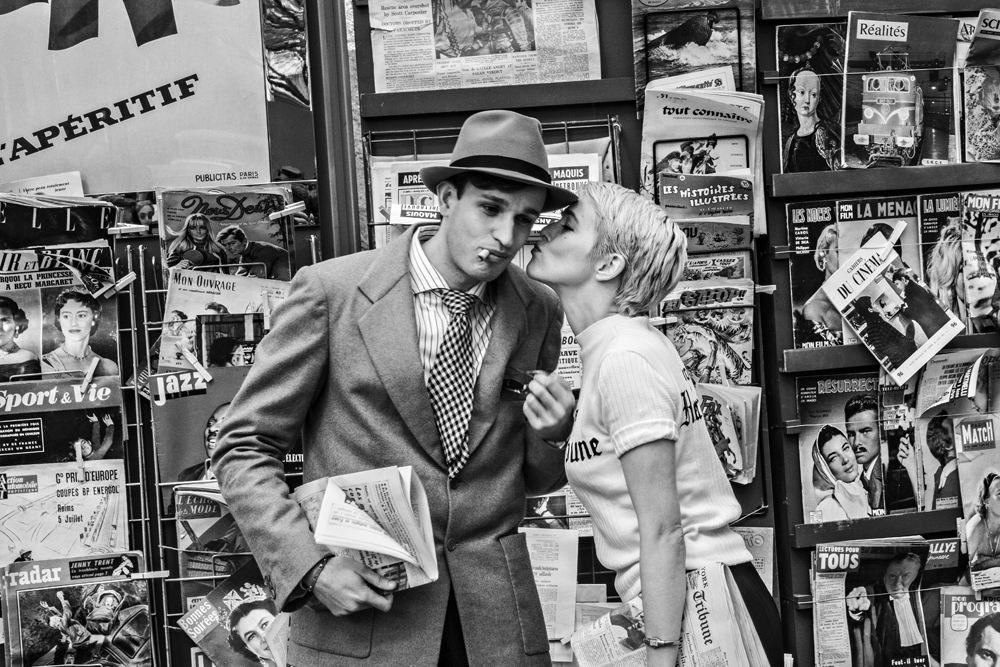
Nouvelle Vague (2025)
Director: Richard Linklater
Starring: Guillaume Marbeck, Zoey Deutch, Aubry Dullin, Paolo Luka-Noé, Bruno Dreyfürst, Benjamin Clery
When we sat down to watch this selection, Tom said to Lorenzo, “I think I screwed up choosing this one.” We want the BKMC to dive into the widest range of films possible, from genre to style to era. We were always going to sprinkle some older films, black-and-white films, and international films into the mix, but we never wanted this film club to feel like homework. Since Nouvelle Vague is director Richard Linklater’s love letter to one of the foundational texts of mid-Century cinema, Jean-Luc Godard’s Breathless, we were worried that this selection was too obscure or pretentious for our budding little kino klatsch.
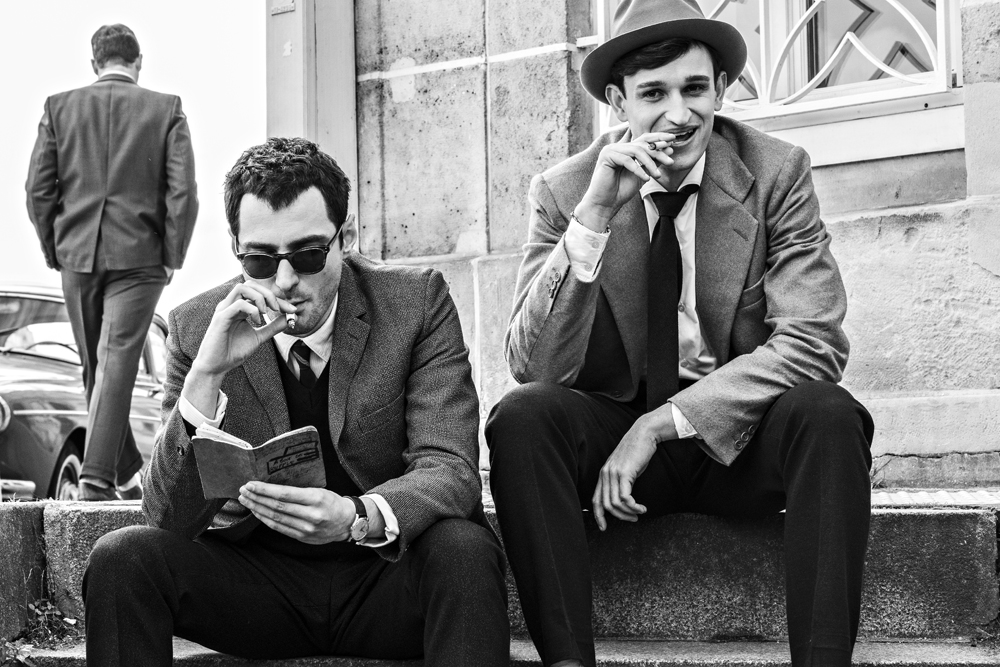
But the brilliance of Nouvelle Vague is that you don’t have to see Breathless to enjoy it, but if you enjoy it, you’ll immediately want to watch Breathless. The former is on Netflix and the latter is on HBO Max, so if you’re so inclined, you’ve got a weekend viewing project. Our fear in choosing it is that the BKs may not vibe with the film’s coolly Gallic pretentiousness, but we honestly think that’s one of the film’s best aspects. Had a French filmmaker executed this, we’re not sure they’d have been able to puncture some of the silliness of these people while still managing to pay loving homage to their work and their passions. Linklater’s American perspective allows the film to stand at a bit of a remove from the people it’s depicting. On the other hand, if you find French artistry pretentious or French intellectuals unbearable to listen to, you might have a hard time with this one.
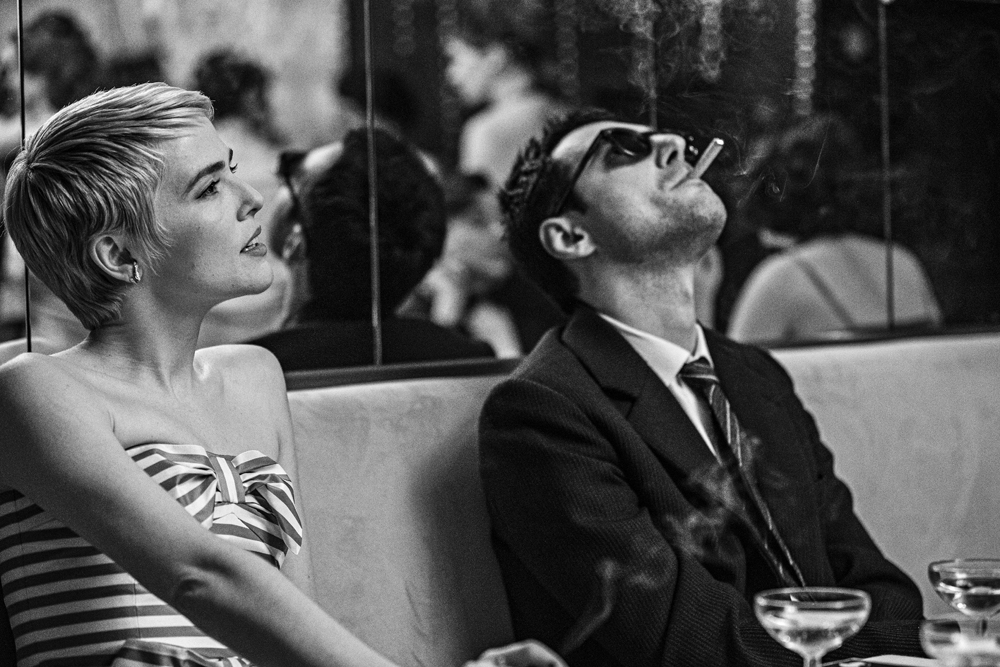
But Guillaume Marbeck is very cute and charming as Godard, capturing a kind of wry, self-aware pretentiousness that makes all of his weighty pronouncements about art seem a little lighter and less serious. We have no idea if the real Godard was so laid back, but Marbeck’s lightly funny portrayal is a joy to watch, especially when he’s chain-smoking and complaining about art with all of his Cahiers du Cinema friends. Aubry Dullin is adorable as Jean-Paul Belmondo but we’re afraid it would be impossible for almost any actor to effectively capture the latter’s charm and white-hot sensuality. Zoey Deutch makes for a prickly and unsure Jean Seberg, and it felt like Linklater was subtly making her the center of the film, whether he realized it or not.
But we kept coming up against a question that we haven’t been able to answer yet. Nouvelle Vague makes it more than clear that Godard was a rebel and that his style of filmmaking was haphazard and improvisational. The magic he created was done on the fly, adhering to a singular and rigidly held point of view. Is it truly an act of homage to engage in slavish recreation of such a boundary breaking artistic moment? Would Godard himself have enjoyed meticulous recreations of guerilla filmmaking moments that were powerful and revolutionary precisely because they were produced on the fly? The film is enjoyable, but when you consider just how much work was put into impeccably recreating costumes, dialogue and production design when most of that stuff was improvised in the original film, we wonder if its very existence misses the point.
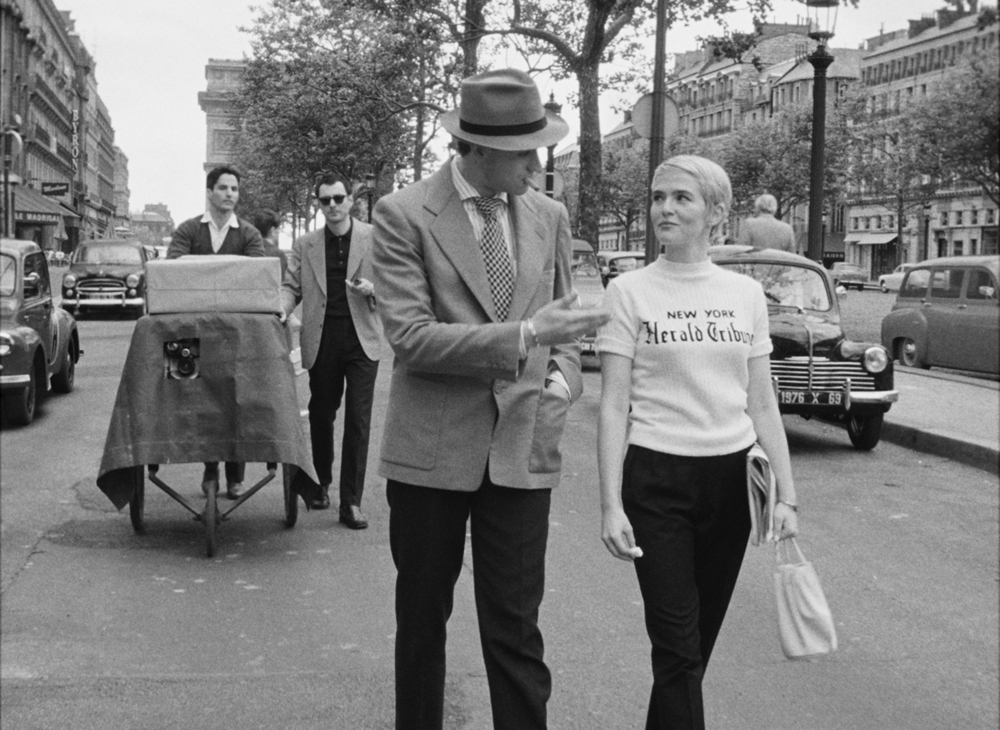
But that’s probably overstating the tension at the heart of the film. A loving homage to a reckless auteur has to be, by its very nature, different from the punk art it’s recreating. And one of the pleasures of Nouvelle Vague is seeing just how lovingly and carefully all of the scenes and moments were recreated. Production designer Katia Wyszkop did a stunning job not only of recreating specific sets and locations from the original film, but more importantly, perfectly bringing 1959 Paris — with its sweeping avenues, vintage cars, and rows of boutiques — back to life. You would swear that this film actually was shot in 1959, so perfect are the recreations.
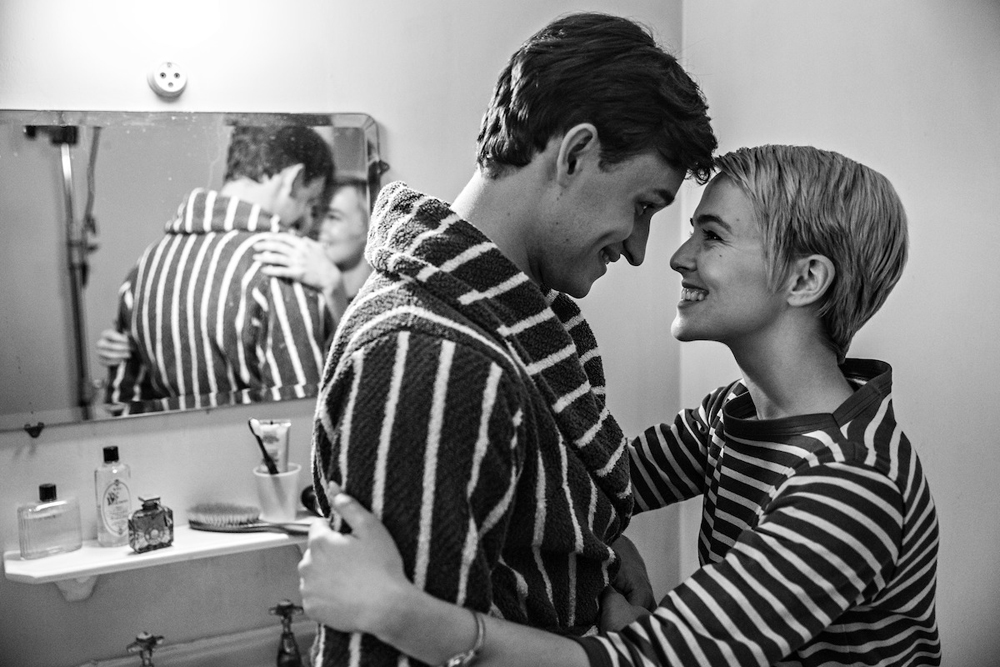
Nouvelle Vague is only concerned with the planning and the production of Breathless, choosing to end before the film’s release and the lightning-bolt response to it, which means it never really touches on how Jean Seberg became a fashion icon for the pre-hippy, post-beatnik bohemian scene of the early ’60s. Her pixie cut and New York Herald Tribune t-shirt instantly became iconic among the fashion-minded, especially those who weren’t interested in the pillbox hats and suit skirts of the looming Kennedy years. She was a proto-manic pixie dream girl half a century before the term was coined. Costume designer Pascaline Chavanne did a lovely job of recreating certain iconic looks from the film, but she also managed to beautifully illustrate both Belmondo’s louche appeal and Seberg’s WASPish sense of rebellion. Lorenzo’s currently on the hunt for a New York Herald Tribune t-shirt.
Further Reading:
How Jean Seberg Became the Face of French New Wave
Behind-the-Scenes photos of the filming of Breathless
The Eternal Cool of French New Wave Movie Star Jean Seberg
Behind the Scenes of Nouvelle Vague: Capturing the Spirit of 1959 Paris
Richard Linklater on making ‘Nouvelle Vague’ and why Godard would have approved of its Netflix deal
NEXT WEEK: Memento
[Photo Credit: Courtesy of Netflix]
Previous post:
Nicole Kidman, Pedro Pascal and Ayo Edebiri for Chanel’s Spring 2026 Eyewear Collection Next Post:
Red Carpet Rundown: Tiffany & Co.’s Blue Book 2026: Hidden Garden Collection Celebration
Nicole Kidman, Pedro Pascal and Ayo Edebiri for Chanel’s Spring 2026 Eyewear Collection Next Post:
Red Carpet Rundown: Tiffany & Co.’s Blue Book 2026: Hidden Garden Collection Celebration
-
The Bitter Kitten Movie Club: DOLEMITE IS MY NAME (2019)
-

The Bitter Kitten Movie Club: WINGS OF DESIRE (1987)
-
The Bitter Kitten Movie Club: ZOLA (2020)
Please review our Community Guidelines before posting a comment. Thank you!
