
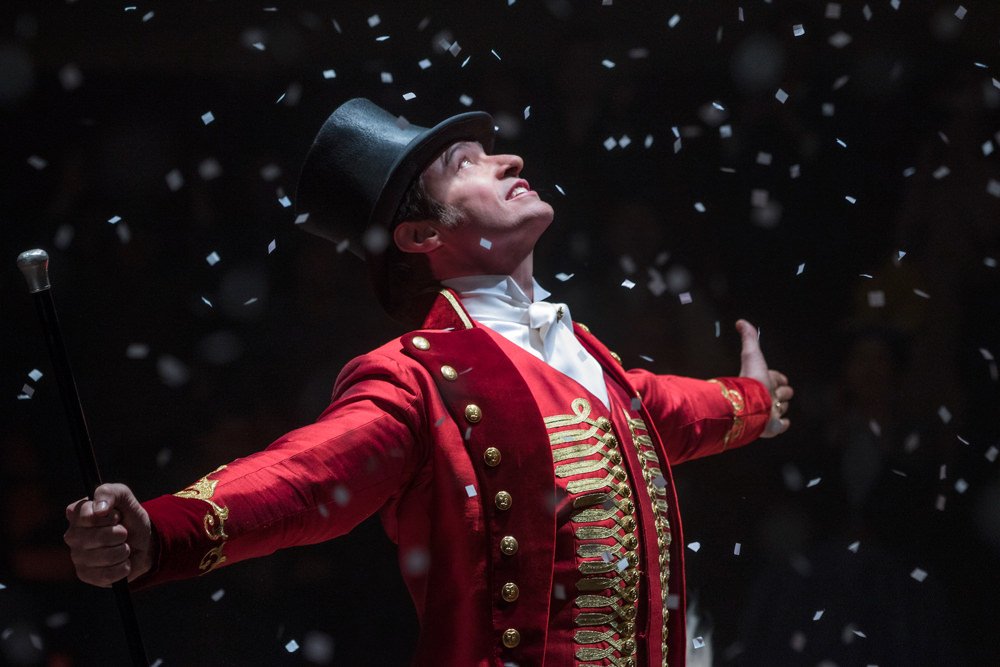
The Greatest Showman (2017)
Director: Michael Gracey
Starring: Hugh Jackman, Michelle Williams, Zendaya, Zac Efron, Rebecca Ferguson, Keala Settle
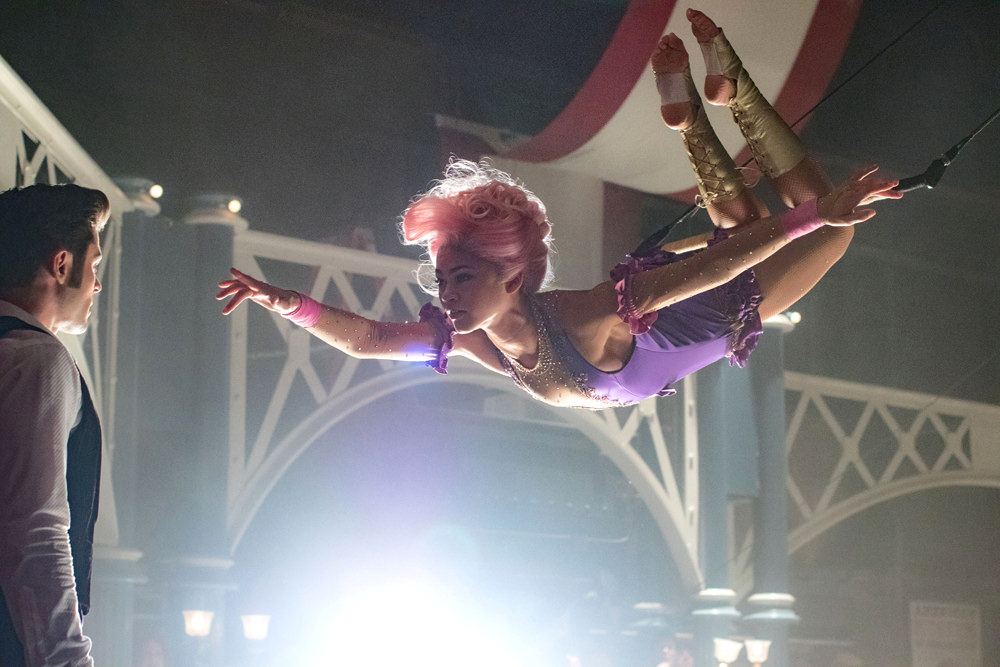
The Greatest Showman is all about the songs — quite literally. Based (incredibly loosely) on the life of circus impresario P.T. Barnum, the film was a passion project for its star Hugh Jackman that took nearly a decade to bring to the screen, and his own sense of showmanship and theatricality drives the entire project. It’s a movie about showmanship which means it’s a movie that doesn’t have much to say about life off a stage. This is both its failing and its greatest strength as a film and it makes the most sense to us to start off a discussion of it by looking at two of its most famous and popular numbers. First up, Rebecca Ferguson, lip-syncing (a bit oddly) as opera singer Jenny Lind, whom Barnum has brought to America on a concert tour as a way to bolster his theatrical bona fides.
By the way, it’s nearly impossible to find high-quality, legal clips of the songs from the film without the lyrics emblazoned all over them; an indication that the entire soundtrack was devised as a sing-along. It’s a stunning performance of a song that has almost no meaning to it, just phrases repeated over and over again, a modern pop ballad lip synced by an actress playing a 19th Century opera legend while wearing a 2017 red carpet gown (technically a Zuhair Murad wedding gown). You couldn’t sum up The Greatest Showman better than that. And yet, the power of this cinematic moment is pure and perfect. Of course a lot of that has to do with singer Loren Allred’s vocal performance, but it also has to do with director Michael Gracey’s choices and how they represent the best of cinematic musicals.
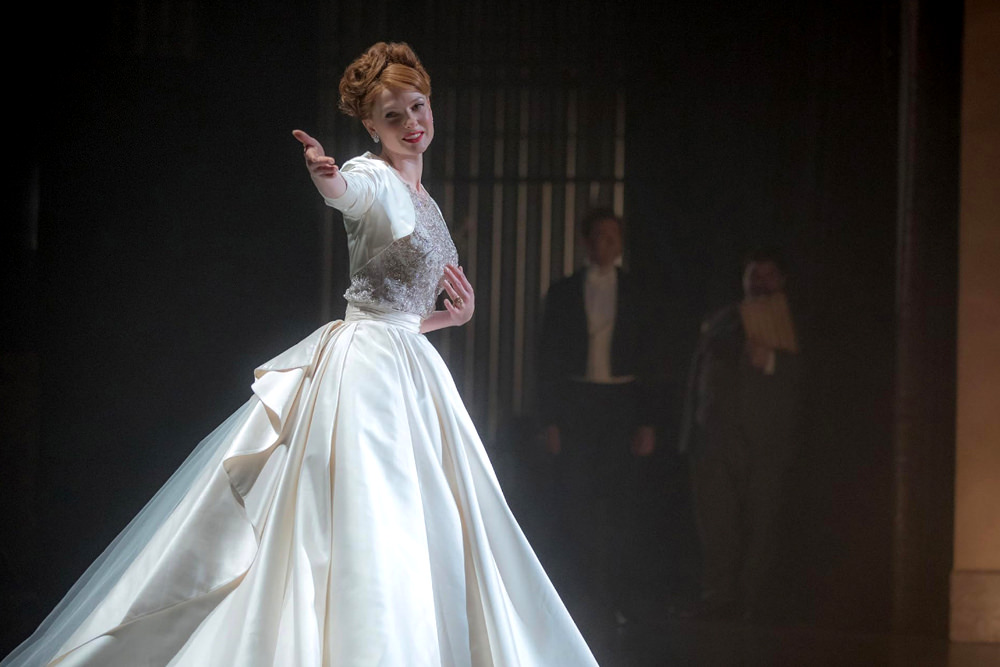
Every shot and interaction during the song represents a particular character’s journey or storyline that would play out for the rest of the film, from Barnum and Lind’s growing attraction to Charity’s understanding of it, to Philip reacting badly to society’s views on his relationship with Anne, to the circus troupe’s growing understanding that their savior is just as narrow-minded as the rest of the world, to Barnum’s joy that the evil theater critic has been briefly won over. It’s a really well-constructed sequence. And to be fair, while the lyrics are incredibly repetitive and lacking in profundity, “never enough” sums up Barnum’s entire character arc. Shoutout to Michelle Williams here, who can make a subtle flick of her eyes come off emotionally devastating. She’d have to. It’s not like the script gave her much to work with.
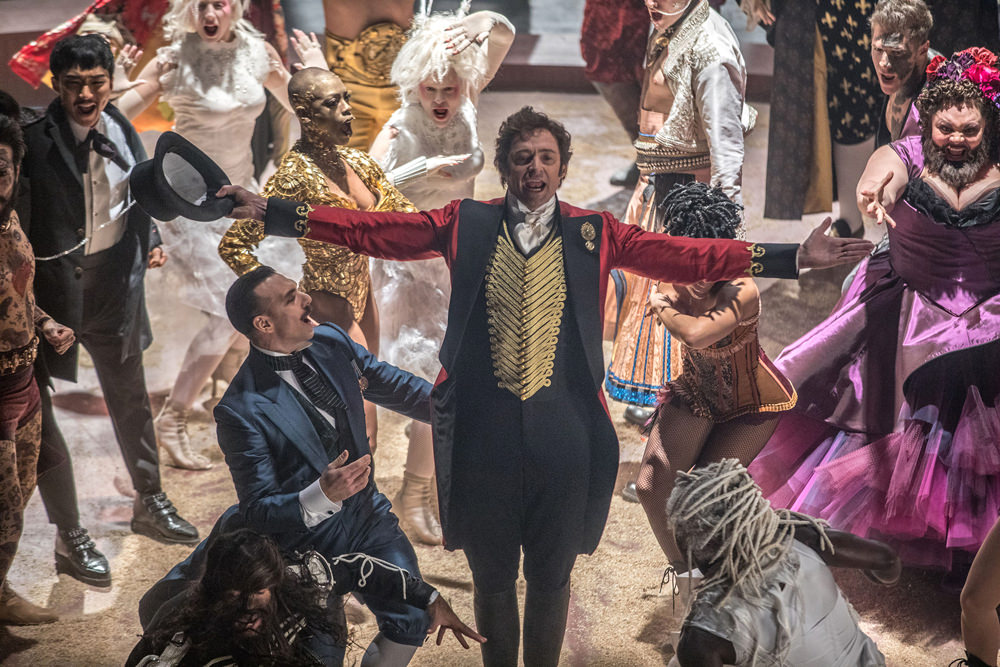
Next, the Bearded Lady and the rest of Barnum’s oddities react to being shut out of high society:
Again, an undeniably powerful moment, full of emotion. This is what movie musicals are meant to do. Unlike “Never Enough,” the lyrics stand apart from the story. There’s a universality to them that turns the song into an anthem for anybody who’s ever felt rejected. But like “Never Enough,” the entire number is a fantasy that owes so little to reality that it almost feels a little insulting. Keala Settle’s performance here is breathtaking in its power and vulnerability. But we had to laugh at the X-Men of it all: a bunch of extremely attractive people singing about how badly the world treats them. When the camera cuts to Zendaya in her pink wig defiantly declaring that the world will simply have to get past her magazine-cover looks, the message does tend to get a little muddled. Also, while there’s no denying that this anthem became the film’s defining moment, we have to point out that almost every song on the soundtrack starts off with a whisper, adds a lot of whoa-whoas, and then ends with a chorus stomping their feet and screaming. The music is stirring, emotional and fun, but it’s formulaic to a fault. That this song represents the best of the formula doesn’t make it any less so.
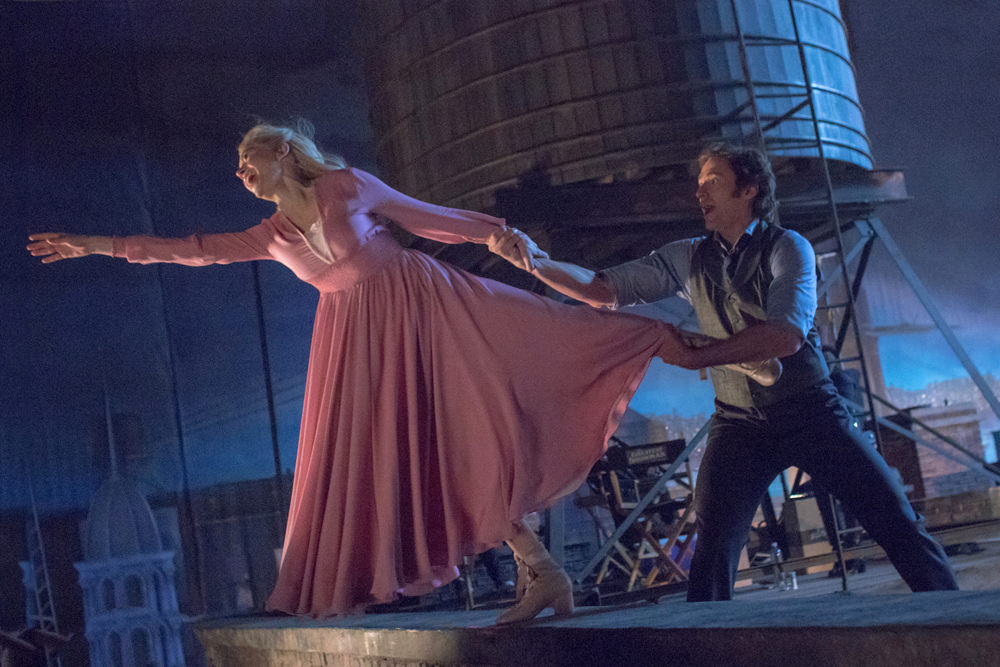
So what we have here is a story that owes nothing to reality or history with a soundtrack full of formulaic songs that seem mathematically devised to get crowds to cry, stomp and sing along. The Greatest Showman is a spectacle in every sense of the word, good and bad, which makes it, ironically enough, the perfect Barnum biography, accuracy be damned. We’re prepared to come down in defense of the film’s revisionist history, especially in light of our praise for Marie Antoinette last week, but if that film glossed over the character’s history or reduced it to rom-com tropes, at least it didn’t go so far as to present her as some sort of humanitarian. We’re mostly on board with the revisionism here, partly because musical biopics have a long history of fabulism and partly because the film is so overwhelmingly artificial in its aesthetic and production design that it would be silly to expect any audience member to see it as a historical document.
Costume designer Ellen Mirojnick dressed several of the women in repurposed modern gowns by Marchesa, Zuhair Murad and J. Mendel, saying that she took her inspiration from modern Vogue magazine covers rather than history. But it’s a bit much to take Barnum as this hero of diversity; this savior of the downtrodden, when the reality is that he was a racist and an exploiter who treated his troupe horribly. The film gives Barnum a few minor moments of racist or exploitive attitudes, but nothing comes of it and his employees are all joyously singing about how much he’s improved their lives by the end. We could get all huffy about it, but is this revisionism any more egregious than Oh, Mary! or Hamilton?
For us, the main issue with the film is its near total lack of interiority for any of the characters. You never know from one minute to the next what they’re thinking or feeling. Marriage problems are introduced solely because it’s time to introduce them. The evil critic slowly rises to clap because it’s time for him to change his mind. Jenny Lind tries to humiliate Barnum because it’s time for things to go badly in the story. Check, check, checking off a list of narrative tropes but not really connecting them in any way. But when those formulaic songs take over, there’s no denying that The Greatest Showman is entertaining as hell.
Random observations:
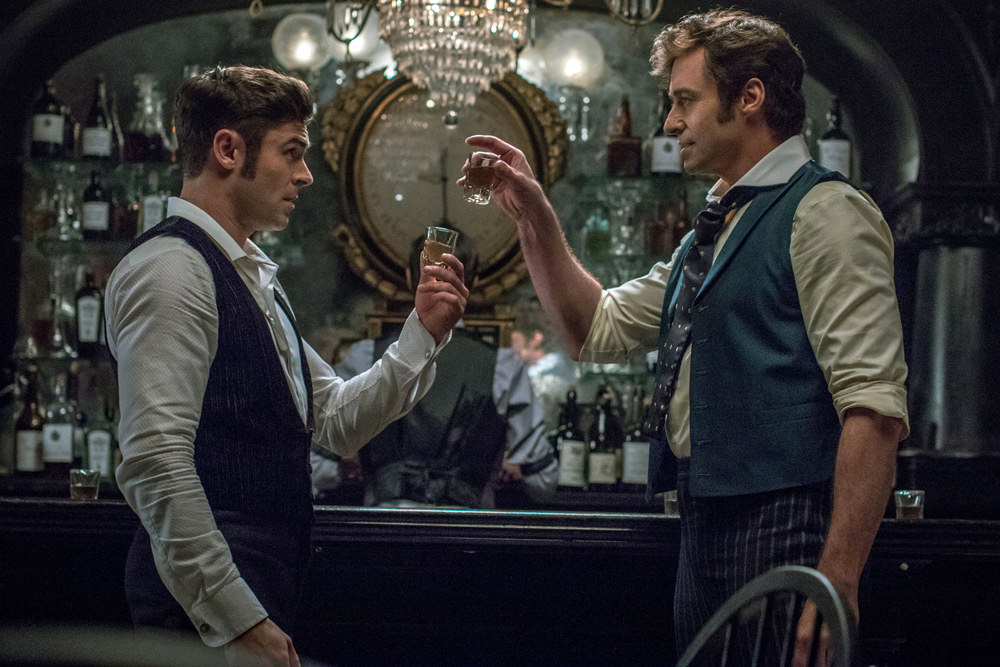
Zac Efron, who cut his teeth on the High School Musical franchise is as much a classic song-and-dance man as Hugh Jackman and he held his own beautifully against him in “The Other Side.” The brief sequence where he tap dances across the bar is as good as anything Astaire or Kelly ever did and it makes us wish he’d do more of this kind of stuff in his career.
It’s jarring to see Zendaya with such a relatively small role, but she wasn’t nearly the superstar she is now. Still, it feels like the film wasted her quite a bit. She and Zac Efron didn’t have much chemistry, we’re afraid. And the less said about how the film treats 19th Century attitudes about interracial relationships the better. Spoiler: you couldn’t just say “fuck them” and get on with your romance.
We’ll have more to say about the work of composers Benj Pasek and Justin Paul in the accompanying podcast, but if the songs are formulaic or simplistic, that can’t really be seen as an issue or a problem, given not only their success as composers but also the success of the film’s soundtrack, which is one of the best-selling musical soundtracks of all time and which led (as it was surely designed to) to a stage production that just opened last month in London.
Keala Settle gives such a lovely performance as the Bearded Lady, but that’s pretty much despite the script, not because of it. Many of the troupe members were based on or portraying actual people, most of whom never get named, and except for Settle’s and Zendaya’s characters, never get any sort of storyline. Most of them don’t even get a line. While there’s no denying who’s the star and the main character here, there’s something a little distasteful about the fact that the film treats the fictional versions of Barnum’s troupe with a dismissiveness that tends to echo the real exploitation they suffered while at the same time holding them up as heroic warriors of diversity and self-acceptance.
We have much more to say about the film in this week’s BKMC pod, where Lorenzo managed to surprise Tom:
[Photo Credit: 20th Century Studios]
Previous post:
Regé-Jean Page and Halle Bailey at the YOU, ME & TUSCANY New York Premiere Next Post:
Anne Hathaway and Meryl Streep at THE DEVIL WEARS PRADA 2 Shanghai Premiere
Regé-Jean Page and Halle Bailey at the YOU, ME & TUSCANY New York Premiere Next Post:
Anne Hathaway and Meryl Streep at THE DEVIL WEARS PRADA 2 Shanghai Premiere
-
Anne Hathaway and Meryl Streep at THE DEVIL WEARS PRADA 2 Shanghai Premiere
-
Meryl Streep and Anne Hathaway at THE DEVIL WEARS PRADA 2 Seoul Premiere
-

Pop Style Opinionfest: Hope, Joy, and Dumbass Celebrities
Please review our Community Guidelines before posting a comment. Thank you!
