
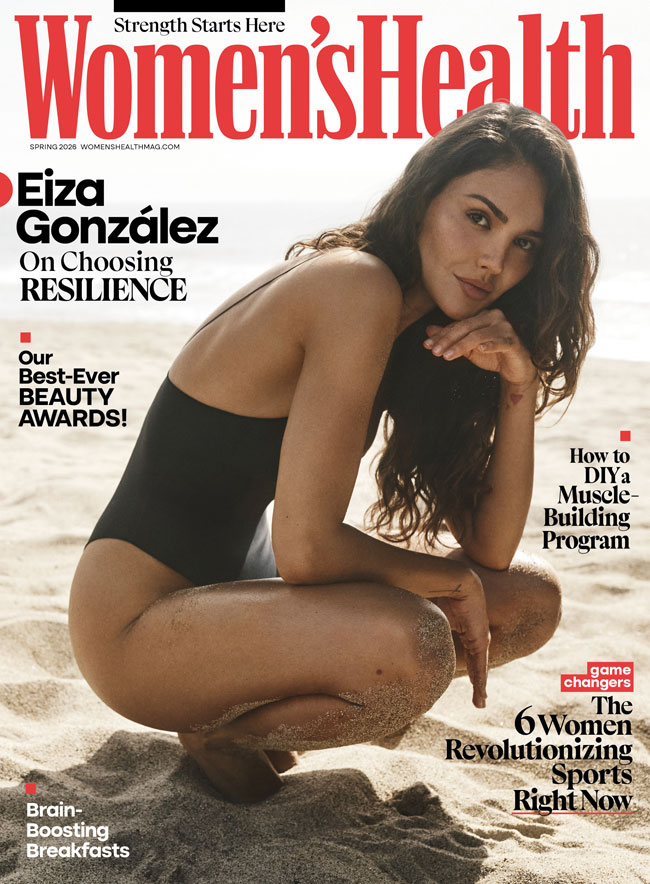
WOMEN’S HEALTH reveals the Spring 2026 issue cover featuring actor Eiza González!
In the feature, Eiza opens about her hard-fought journey through grief, body dysmorphia, and numerous chronic health challenges, sharing how she’s channeling resilience by fueling herself and moving more intentionally.
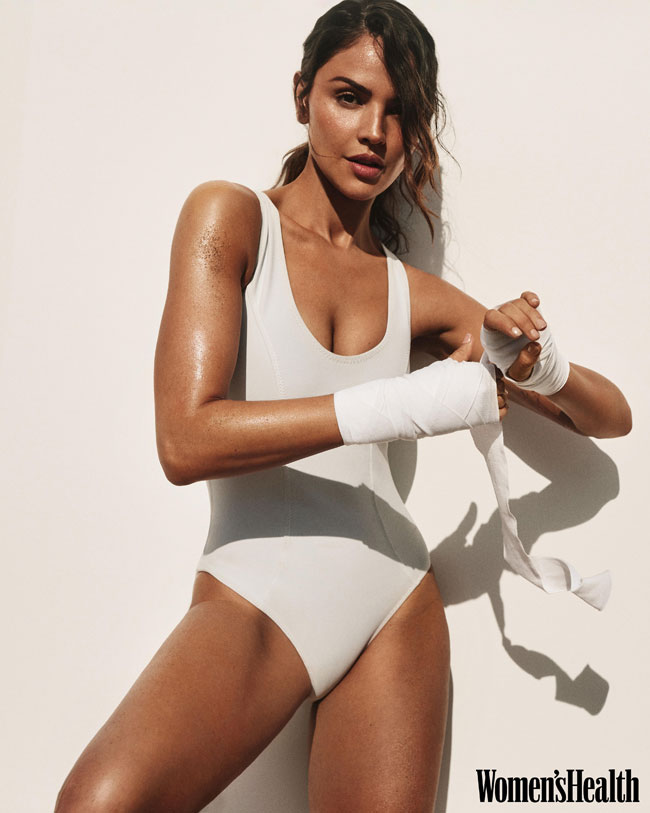
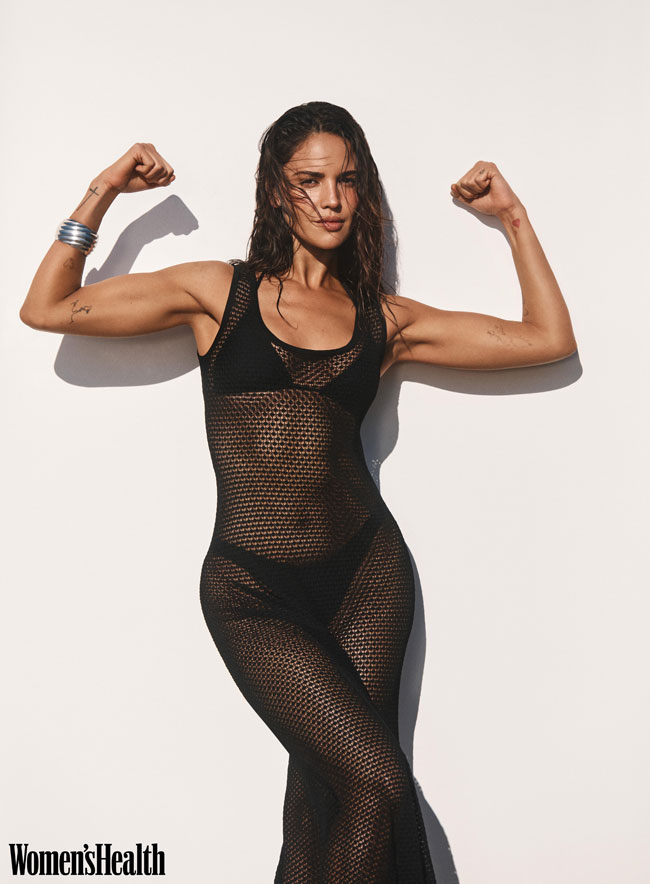
On her upcoming projects, In the Grey (Guy Ritchie) and I Love Boosters (Boots Riley) and her process of creating a character in I Love Boosters:
“I like bold characters. I love women with agency who are chaotic and in a way multifaceted, and I think those projects couldn’t be more different….I had a huge question mark on how to play her, and Boots was just like, ‘Go for it.’ And so we kind of created this deadpan emo character. You pray that it lands, because it’s a real big swing, and she’s hilarious. I find her really funny.”
On her acting career:
“I was so terrified when I broke into the industry [with 2017’s Baby Driver] because I was very self-conscious about English not being my first language. I felt like I was just never going to have the naturality that it took. Like when you’re speaking your language, you react in your language, and having to sort of fake that because you’re not in your natural language, people sometimes take for granted. Preparation and discipline are what really make the difference.”
On her struggles with confidence, body image, and self-consciousness after growing up in the public eye and navigating grief in the wake of her father’s passing when she was 12:
“It’s so funny because when I was young, I always thought, Oh my God, I’m so mature for my age. And everyone would say, ‘You’re so mature for your age. You’re incredibly mature for your age.’ And you start kind of believing that story….Now with age and maturity, in hindsight, I’m like, I was really unwell. I never went down a rabbit hole of alcoholism or [other addictions]—mine was just this incredibly complex journey with my own body.”
On the brutal tabloid culture era of the late ’90s and early 2000s, which contributed to her own long battle with body dysmorphia:
“It was horrifying. It was with the intent to make fun of them, to minimize them, to make them feel like they’re not good enough—or to humanize them but in a way that is vile, not in a compassionate or empathetic way but in a vicious way.”
On feeling relieved to see a shift in how women embrace their bodies:
“It’s so beautiful now when I see women flaunting their bodies the way they are. I’ve had cellulite since I was really young. I’m prone to it, with genetics, and I remember being, like, terrified of showing it, and now I’m just like, Who the f*ck cares?”
On living with endometriosis, adenomyosis, and polycystic ovary syndrome (PCOS), conditions that took years to properly identify, she reveals to Women’s Health:
“It just got to this place where eventually your body cracks, and sadly, it was kind of the situation for me….[It’s] the usual story you hear over and over again with women. It’s the ‘Oh, this is normal. This is part of your cycle. This is part of your cramps. Oh, this pain is normal. Oh, this level of bleeding is normal. Oh, these mood swings are normal. This weight gain is normal.’ And it’s just decades of that.”
On being surprised to learn how unfamiliar her conditions were to so many women around her once she began discussing her health with friends and family after her first diagnosis, at the age of 30:
“The more I spoke to others about these things, women were like, ‘I’ve never heard this before.’ And that was mind-boggling. You look at the numbers out there, women with endo or adenomyosis or PCOS, and most of my girlfriends had no idea what [they] were.”
On how her experience underscored what she sees as a deeper issue in women’s health care:
“It made me understand how broken the system is. The gaslighting of years of ‘You do have it,’ and then ‘You don’t have it,’ from doctors. Just getting a little bit of a light at the end of the tunnel made a difference. Now I can take action and be kinder to my body, where I used to be like, ‘Why am I not recovering faster?’ Or ‘Why am I getting these period pains?’”
On the importance of fitness to help her stay grounded and support her mental health:
“Feeling good in my body makes my mind stable, and it’s huge for me.”
[Photo Credit: Adam Franzino for Women’s Health Magazine]
Previous post:
Elle Fanning in Alberta Ferretti at SiriusXM’s Front Row to Promote MARGO’S GOT MONEY TROUBLES Next Post:
Elle Fanning in Alberta Ferretti at SiriusXM’s Front Row to Promote MARGO’S GOT MONEY TROUBLES Next Post:
-

YOU, ME & TUSCANY Star Regé-Jean Page for ESQUIRE UK’s April Digital Cover
-

Sofia Coppola Covers ELLE’s Women of Impact Issue, Talks Motherhood, Revisiting MARIE ANTOINETTE and More
-
Olivia Dean Covers ELLE’s ‘Women in Music’ Issue, Talks Grammys Win, Navigating Fame and More
Please review our Community Guidelines before posting a comment. Thank you!
