
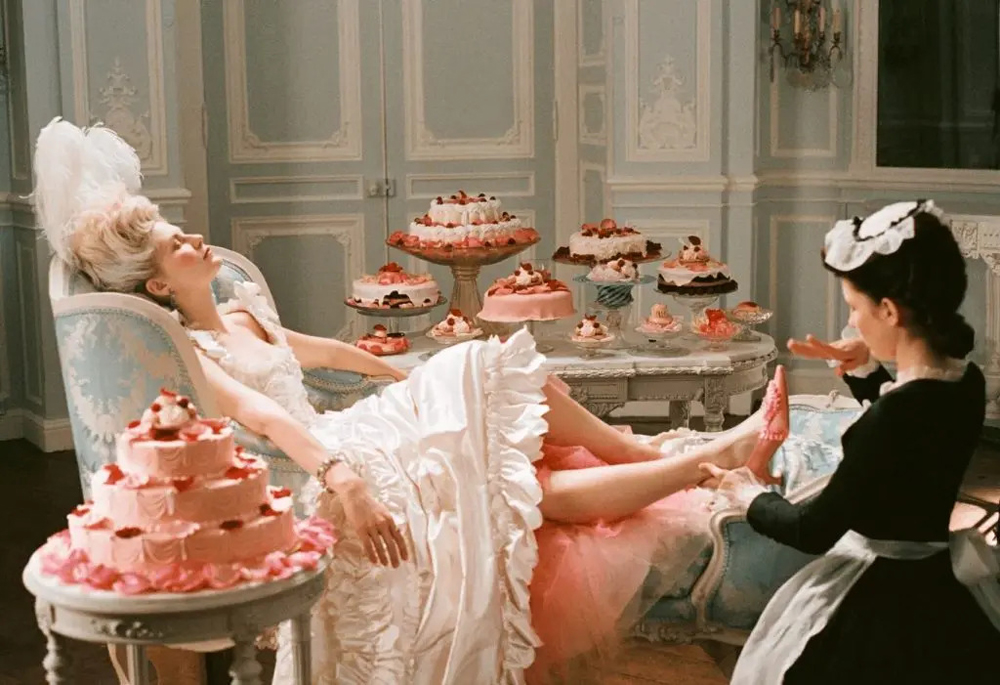
Marie Antoinette (2026)
Director: Sofia Coppola
Starring: Kirsten Dunst, Jason Schwartzman, Rose Byrne, Asia Argento, Rip Torn, Judy Davis, Marianne Faithfull, Jamie Dornan, Tom Hardy
Welcome to the first week of the Bitter Kitten Movie Club! We’re trying to take a slightly different approach to talking about movies here. Rather than offer a traditional review, what we want to do is probably more akin to an old school TV show recap from the glory days of blogging, with observations, trivia, links to further reading and, like the book clubs we’re modeled on, a discussion. Because we intend to talk about the widest range of films and genres possible, each entry is going to be distinct. For a highly influential, twenty-year-old film like this one, we have two decades of supplemental interviews, oral histories, and deep dives to help us contextualize it.
One of the more interesting things we uncovered when researching Marie Antoinette was that there was a considerable backlash to it at the time of its release, with the booing at the Cannes Film Festival premiere becoming part of the film’s mythos almost immediately. The film didn’t wow either audiences or the critics at the time but in the years since, its reached a cult status as a highly influential film that seems, in retrospect, tailor-made for the TikTok generation.
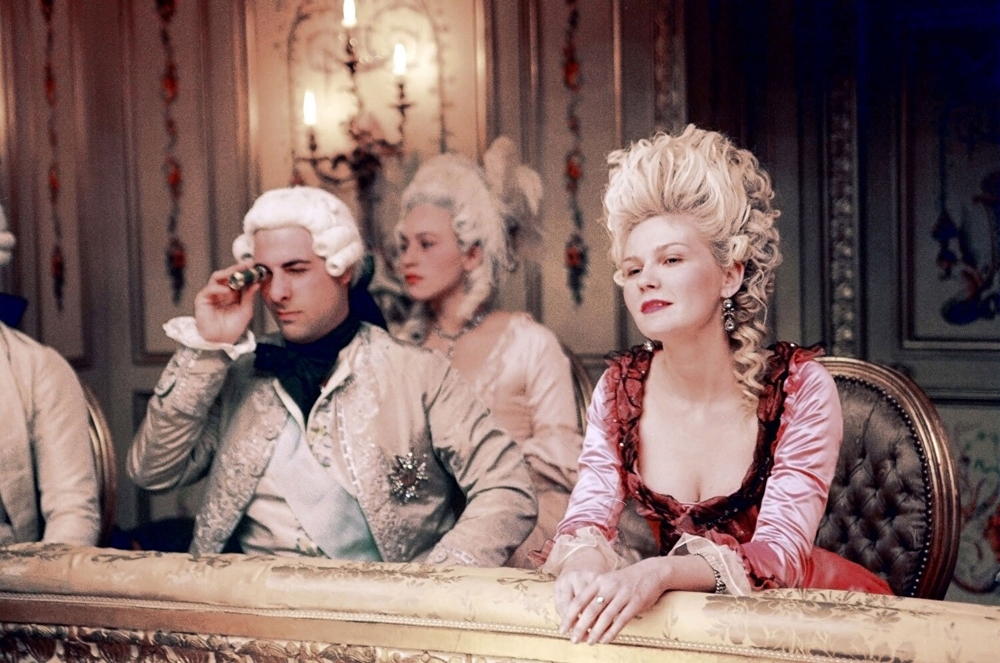
Sofia Coppola is never better than when she’s looking at the world through the eyes of a beautiful, bored girl, surrounded by girl things. One of the things audiences had trouble accepting in her portrayal of the French queen was her choice to recast the court of Versailles as a typical 20th century high school social milieu: popular girls and nerds and jocks and mean girls and sluts. If anyone came into this film looking for a serious unpacking of French history or the causes of the French Revolution, they must have been furiously disappointed by it, especially since the film largely refuses to offer any criticisms of the woman at its center. Coppola wasn’t particularly interested in looking at Marie as a historic figure of some importance, nor was she interested in depicting the one thing everyone remembers about her. Instead, it was shoes and feathers, wigs and macarons, toy dogs and Champagne all the way — or for as long as the party could last.
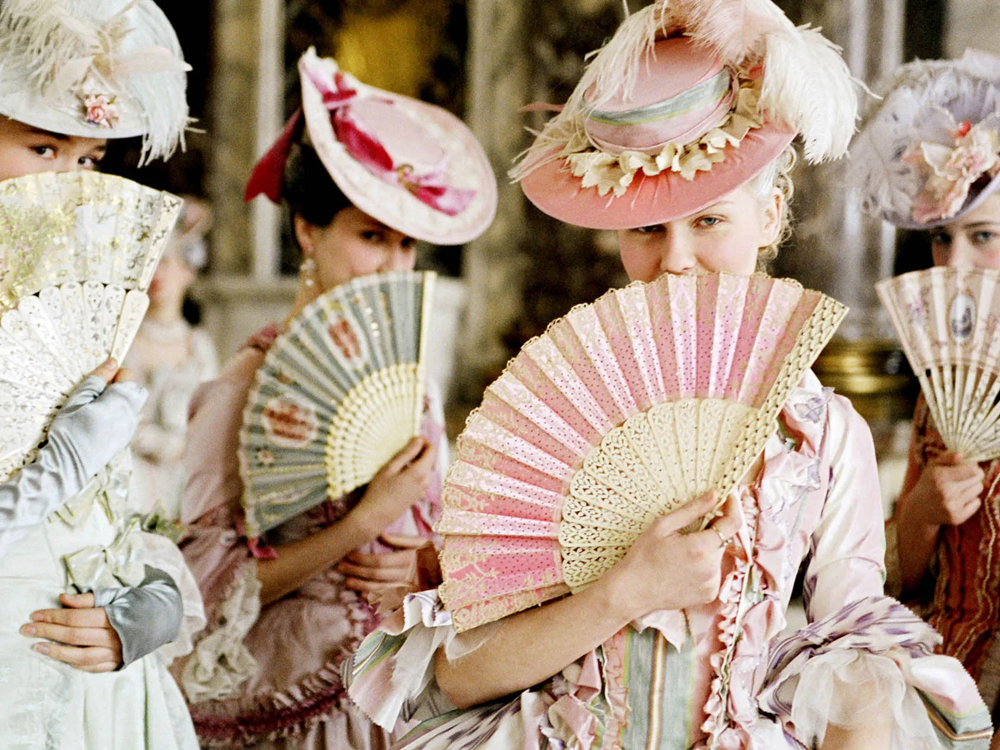
The costume design by Milena Canonero takes some liberties here and there, and most of the wigs don’t really come all that close to the massive towers of the period, but the combination of stunning old world costume design and real old world locations is one of the reasons why Coppola can get away with the New Wave soundtrack that seems to have pissed off the film’s detractors. The film simply wouldn’t have been as compelling if she’d done a Luhrmann-style Romeo + Juliet modernization, where the modern costumes and setting would feel more appropriate with the soundtrack. The juxtaposition works because so much care was put into interpreting the richness and ostentation of the times. So many scenes are breathtaking in their lushness, like the wedding scene or the masked ball, or simply very, very pretty, like the scenes at the Petit Trianon. But in terms of the film’s overwhelming aesthetic qualities — and not coincidentally, a reason why an audience at a French film festival might wind up booing the film, you can’t provide a better summary than the film’s most infamous sequence, the “I Want Candy” montage:
Despite it being the best, most famous and most influential part of the film (there’s likely no Bridgerton without this scene setting the tone), we can see why it might have set some of the more traditionally minded audience members off. Putting aside the juxtaposition of visual and music, which offended some people, or the inclusion of a pair of Chucks in the montage, the scene reduces a complicated and much maligned historic figure to a teenager getting a makeover in a rom com, complete with an officious gay (Ted Lasso‘s James Lance) to help with the final look. It’s brilliant, but it’s also potentially enraging. The luxury and ostentation become almost overwhelming, and the film never takes a second to show any of the living conditions the rest of France was suffering through at the time, so it feels like a romanticization of exploitation, when look at from a certain perspective. But if Coppola had intercut these scenes of partying and fashion and wigs with depictions of squalor and slums, we don’t think the film would have been improved by it. It might have been more accurate to the times, and it might have provided context the film sorely lacks, but again, that’s not the story Coppola wanted to tell here.
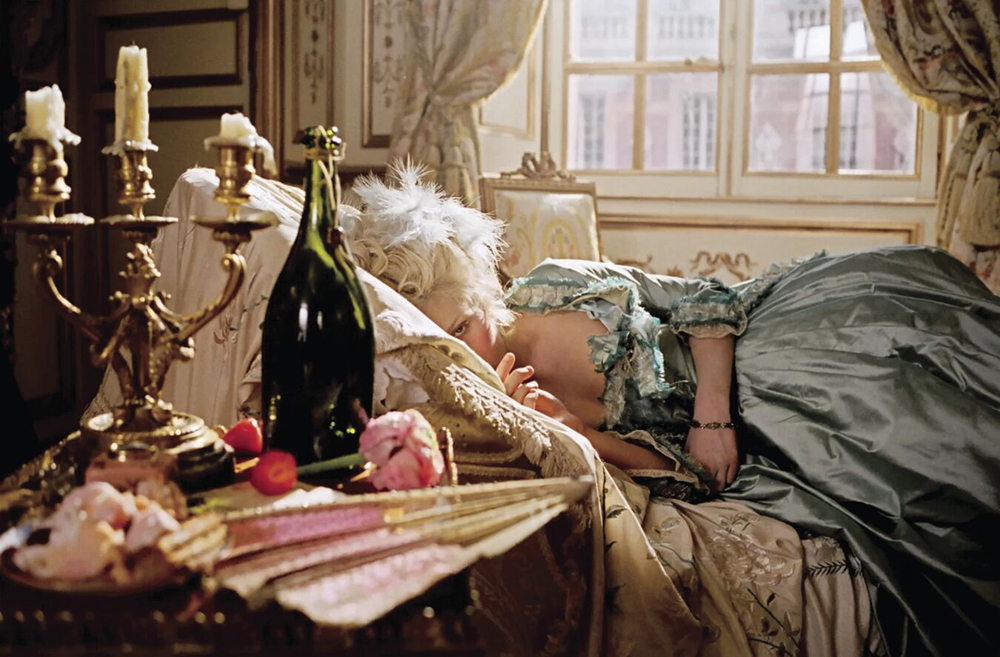
Still, the film loses quite a bit of its energy once the inevitability of history comes into play. It might have been a bold choice to continue the punk soundtrack well into Marie’s fall from grace and march to the guillotine instead of switching to a suddenly more dour aesthetic, which tends to make the film feel unbalanced, its denouement treated more like an afterthought than the culmination of Marie’s story. On the other hand, as Kirsten Dunst astutely noted in Vogue’s oral history of the film, marches to guillotines or soldiers breaking down doors is not part of Sofia Coppola’s cinematic vocabulary. It’s possible to take an uncharitable reading of Marie Antoinette that posits Coppola is romanticizing a controversial monarch and an extremely volatile period. The angry mobs are faceless, their grievances never even articulated, their lives unportrayed.
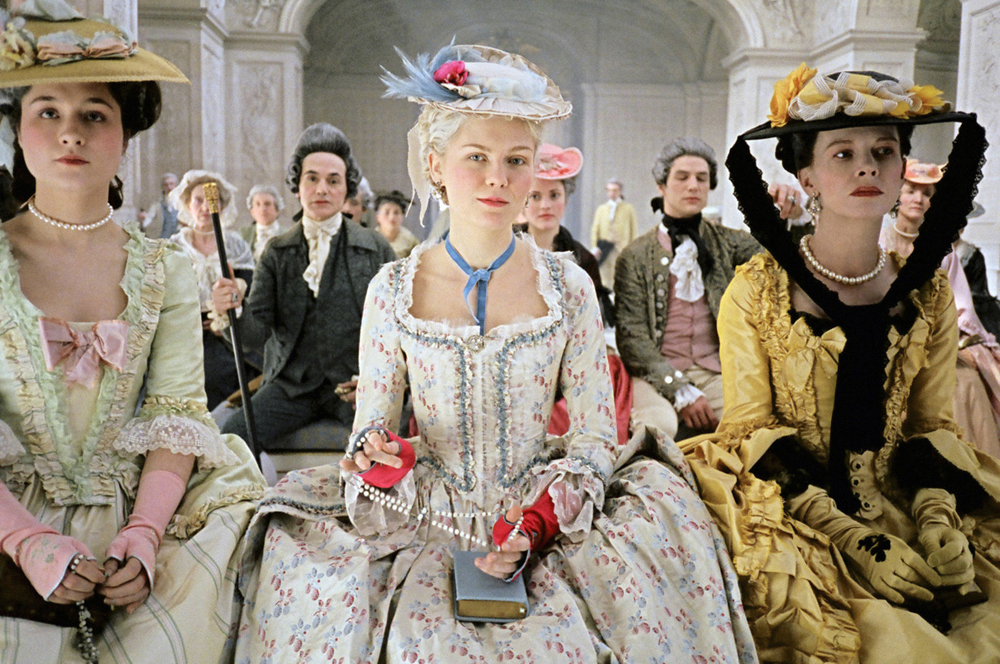
This is a deliberate choice, of course, but it stops working when the Ladurée and Manolo Blahniks exit center stage. Coppola’s not interested in recreating or contextualizing or even portraying big moments in history. She’s interested in unpacking the world through a privileged young woman’s eyes and exploring how she navigates power, expectations, and betrayals. To look at the world through a 14-year-old princess’s eyes is to portray a world of shallow luxury and ease. Coppola proceeds from the idea that the public already knows the most famous aspect of Marie Antoinette’s life, that it had been portrayed countless times before, and that there was no reason to build up to that moment. It’s a clearly defensible creative choice that fits with the themes and aesthetic of the film, but it does tend to leave the story in an uneven state. Marie Antoinette had a gloriously charmed life until she didn’t. The end. But we’ll defend that final shot of them leaving Versailles. There’s something so much sadder and more poignant about “I’m saying goodbye” than a scene with her screaming and crying as she ascends the stairs of the guillotine.
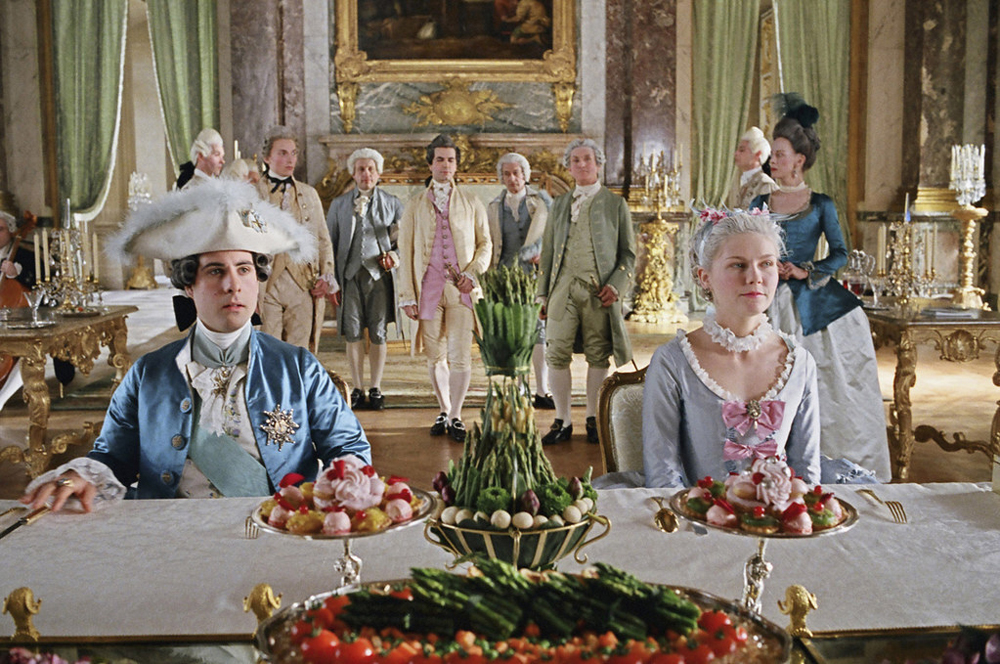
The rest of the cast is perfect. Rose Byrne is delightful as shallow party girl Duchesse de Polignac. Jason Schwartzman is lovely as Louis, sweet and nerdy and shy. The film doesn’t come down too hard on the question of Louis’ sexuality, preferring to imply that the long period without consummation had more to do with his own youth and sheltered life. Dunst is very good at portraying a character a decade younger than her, but Schwartzman isn’t, and we wonder if the the themes of the film might have hit harder if actual tweens or teenagers were cast for the earliest scenes in the film. Jamie Dornan, in his first role as Count Fersen is a gorgeous pinup, exactly how Marie might have seen her rumored lover. Judy Davis is a hilariously imperious Comtesse de Noailles and we absolutely love Asia Argento’s turn as the burping, roughly un-ladylike Comtesse Du Barry.
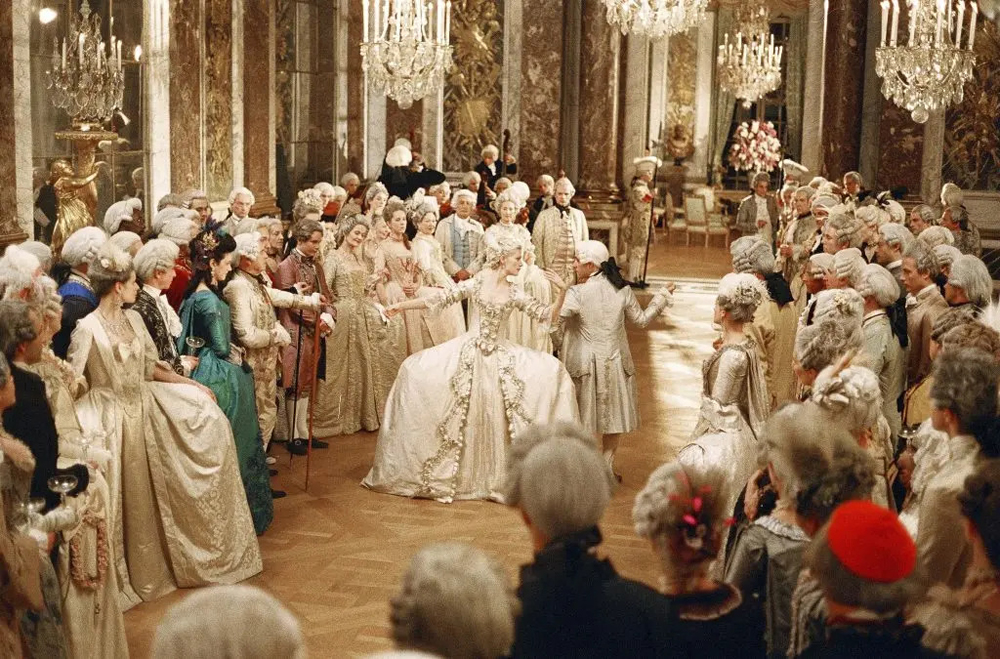
Sofia Coppola will be releasing a documentary on the making of the film in October, to mark its 20th anniversary. We were a bit surprised to read that this film, which we consider a classic, had a rough response, but we think it’s a perfect time to rediscover its charms and its brilliance. We have more thoughts to offer on Marie Antoinette in our inaugural BKMC podcast:
Related: The Cinematic History of Weaponized Pink
NEXT WEEK: The Greatest Showman
[Photo Credit: Sony Pictures]
Previous post:
YOUR FRIENDS & NEIGHBORS Star Olivia Munn on THE TONIGHT SHOW STARRING JIMMY FALLON Next Post:
YOUR FRIENDS & NEIGHBORS Star Olivia Munn on THE TONIGHT SHOW STARRING JIMMY FALLON Next Post:
-
Bitter Kitten Movie Club for April 2026
-
RUPAUL’S DRAG RACE: Karens Gone Wild
-

RUPAUL’S DRAG RACE: Mammas, Don’t Let Your Babies Grow Up to Be Drag Queens
Please review our Community Guidelines before posting a comment. Thank you!
